How to Eliminate Silverfish from Your Basement in Scarborough
If you’ve spotted silverfish in your basement, the positive part is that you can usually bring under control the problem with a mix of lowering moisture, cleaning, and sealing. The key is to treat the space as a humid environment that supports a silverfish infestation, then get rid of the conditions that let them thrive. For many homeowners looking for pest control Scarborough advice, the first step is understanding that silverfish are not random visitors: they are pulled toward damp, dark, undisturbed spaces with access to organic material.
In Scarborough, basements often face extra pressure from humid summer conditions, older foundations, and homes near Lake Ontario where indoor humidity can stay high. That combination makes moisture control especially important. If you act early, you can often stop a small problem before it becomes a larger infestation.
What lures silverfish to basements?
Silverfish are usually attracted by humidity and moisture. A basement that remains wet after rain, has poor ventilation, or collects residual moisture around walls and floors becomes an ideal hiding place. They prefer dark spaces, which is why they are often found behind stored items, inside shelves, and along the edges https://oakville-onet757.zenbloomer.com/posts/residential-pest-management-in-scarborough-nearby-homeowner-guide of rooms where activity is low.
Another major attraction is food source material. Silverfish feed on paper and cardboard, starches, glue, and other organic matter. That means cardboard boxes, old files, wallpaper paste, and paper goods are all fair game. If your basement is used for long-term storage, silverfish may take up residence without being noticed for quite some time.
Basement conditions in Scarborough can make this worse. Older homes often have small cracks and crevices in the foundation, and those gaps can allow damp air and insects inside. Even minor leaks or poor grading around the house can create pockets of basement moisture. In some homes, the problem is not just the basement itself but also nearby utility rooms, laundry rooms, and cold storage areas where moisture collects.
From a pest prevention standpoint, the main driver is nearly always a mix of water and shelter. Silverfish do not need much to survive; they just need the right environment. That is why humidity reduction and moisture control matter so much in any basement treatment plan.
How do I know if I have silverfish in my basement?
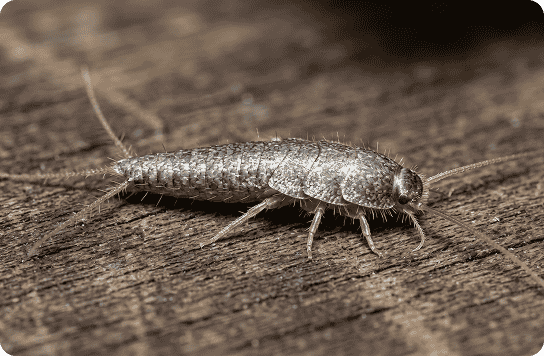
The earliest sign is often seeing a live silverfish at night. These insects dart around and are usually observed darting across floors, walls, or stored items when lights come on suddenly. Additional silverfish signs include small rough holes or nibble marks in belongings, especially anything made of paper, glue, or fabric.
Inspect closely for droppings, which are tiny black pepper-like specks. You could also see shed skin, because silverfish molt as they grow. Their cast skins are good evidence that they have been present in the area for some time. In some cases, people mistake these signs for dust or debris, so an thorough inspection is important.
One of the most important indicators is damage to books and boxes. If you see torn pages, damaged edges on files, or unexpected damage to stored materials, silverfish may be eating in hidden spots. This is often common when books, journals, photos, or documents are stored in exposed shelves or in old cardboard boxes.
A thorough home inspection of the basement should check baseboards, behind appliances, under sinks, around pipes, and near stored belongings. Silverfish often nest where air circulation is limited and humidity remains high. If the area also presents signs of mold, the space may be encouraging a wider moisture problem that could draw other basement pests as well.
For Scarborough property owners, it is worth checking not only the basement but also adjacent utility areas. If the home is aged or by the lake, pest activity may be more noticeable because the indoor environment stays slightly more humid for longer stretches.
What can I do right away to eliminate silverfish?
The best short-term response is a combination of using a vacuum, dehumidifying, and limiting hiding spots. Begin by vacuuming baseboards, corners, storage racks, and any cracks where silverfish may be hiding. Be sure to empty the vacuum bag or canister promptly so insects do not escape back into the room.
After that, use a dehumidifier to reduce indoor humidity. This is one of the most effective immediate steps because silverfish have trouble in dry conditions. In many basements, simply lowering the moisture level can make the environment much less appealing. Pair that with better ventilation if possible, such as running fans or improving airflow around laundry and storage areas.
Another helpful step is sealing cracks. Use caulking to close small openings along walls, trim, utility penetrations, and the joint where flooring meets the foundation. These openings often serve as entry points and harborage areas. Sealing gaps is a core part of integrated pest management because it addresses the source rather than just the visible insects.
Sticky traps can help you monitor activity and catch some wandering insects. Place them along walls, near shelves, and close to suspected hiding areas. They are not a complete solution, but they are useful for seeing whether your efforts are reducing activity.
Also remove clutter, especially anything made of paper or cardboard. Move items into sealed storage bins instead of leaving them in open stacks. Reducing access to food and shelter is a simple but powerful form of sanitation and pest prevention. If the basement is very cluttered, a deep clean may be necessary before other treatments can work effectively.
Are the DIY silverfish treatments really effective?
DIY treatments can assist, but they are usually most successful when used as part of a more complete strategy. Diatomaceous earth can function as a drying dust in areas where silverfish travel, especially along edges, under shelving, and near suspected travel paths. It may be a helpful non-toxic option for homeowners who want a low-chemical solution, but it must stay dry to remain effective.
Boric acid is another popular treatment. It can be useful against silverfish when applied carefully in cracks, voids, and inaccessible areas. However, it should be used with prudence around children and pets. Like other DIY products, it works best when the basement has already been dried and cleaned.
Essential oils are often promoted as natural repellents, but they are usually restricted in real-world effectiveness. They may provide temporary scent-based deterrence, yet they rarely solve a true silverfish infestation. If you are relying on essential oils alone, you are likely only masking the problem rather than treating it.
Mosquito Man Scarborough
1225 Kennedy Rd, Scarborough, ON M1P 4Y1, Canada
+1 647-243-7241
https://maps.app.goo.gl/8SuLx1MkkqVJFc2m9 https://mosquitoman.ca/pest-control/scarborough/
43.7561897, -79.2751574
That is why DIY pest control has limits. Silverfish are tenacious and will return if the moisture source remains. A successful DIY approach usually combines moisture reduction, sealing, cleaning, and monitoring. If those steps do not change the pattern of activity, the problem may be deeper than it first appears.
For many homeowners, the best results come from a targeted treatment strategy that focuses on sealing gaps, reducing humidity, and eliminating places where silverfish can hide. DIY can be a solid first step, but it is not always the final answer.
When should I contact pest control in Scarborough?
You should call a professional pest expert when the signs suggests a bigger infestation or when your efforts are not lowering sightings. If you keep seeing silverfish after drying the basement, vacuuming, and placing traps, the insects may be nesting in hidden wall voids, floor gaps, or nearby damp areas. Frequent sightings are one of the clearest signs that it is time for help.
An seasoned provider of pest control Scarborough services will usually start with a detailed basement inspection. In many cases, local pest control teams also inspect laundry rooms and utility areas because moisture-driven pests often spread beyond one room. They look for leaks, condensation, poor airflow, foundation issues, and other conditions that allow insects to persist.
Professional help becomes especially valuable when the infestation is tied to structural issues. If there are ongoing moisture problems, damaged insulation, gaps around pipes, or cracked concrete, simple products will not solve the underlying issue. A proper plan may include repairs to the structure, improved ventilation, and targeted insect control to address both the pest and the cause.
Professional treatment is also worth considering if silverfish are damaging stored items like books, files, or keepsakes. In those cases, an exterminator can help with an effective basement treatment and recommend long-term prevention steps tailored to your home.
How can I keep silverfish from returning?
Protection starts with moisture control. Keep using a dehumidifier if the basement stays damp, especially during humid weather. In Scarborough, this matters even more during warm months when moisture levels can rise quickly. Stable dryness is one of the best forms of pest control for silverfish.
After that, focus on structural sealing. Check for cracks, gaps, and weak points where damp air or insects can enter. Use filler for smaller openings and arrange building repairs for larger defects. Closing these paths helps reduce both moisture intrusion and pest access.
Switch to sealed sealed containers instead of cardboard containers. This protects paper goods, photographs, and hardcovers from both moisture and feeding damage. If you must store cardboard boxes temporarily, keep them off the floor and away from walls, but sealed bins are the better long-term choice.
Maintain a regular cleaning and cleaning routine. Vacuum corners, dust shelves, remove clutter, and check for leaks or condensation around pipes and windows. This supports better hygiene and reduces the organic material silverfish can feed on. A tidy basement is less inviting and easier to monitor.
Long-term prevention also depends on good airflow. If your basement lacks proper circulation, consider ways to improve circulation so dampness does not linger. A dry, clean, well-sealed basement is far less attractive to silverfish and other basement pests.
What should Scarborough homeowners know about basement pest issues?
Scarborough homes can face distinct basement pest challenges because of area weather and housing conditions. Many older homes have aging foundations, small cracks, or limited insulation, all of which make it simpler for moisture to enter. That creates the kind of setting where silverfish and other pests can move in quietly.
Lake Ontario humidity can also contribute to indoor humidity, especially in homes that are closer to the waterfront or in low elevation areas. When outdoor air is humid, basements can trap more moisture, which raises pest pressure. This is one cause why moisture-driven insects are frequent in the region.
Seasonal insect presence is important too. Silverfish commonly become more visible during times of high humidity, but they can remain active all year long in a damp basement. Summer conditions can worsen the issue, while cooler months may drive pests deeper into sheltered indoor areas.
Owing to these local conditions, homeowners should go beyond one-time treatment. Effective pest control in this part of the city usually brings together checking, dehumidifying, sealing, and regular monitoring. That local approach is especially valuable in neighborhoods where basements are used regularly for keeping items, laundry, or utility functions.
In real-world situations, pest control Scarborough services often focus on basements first because this is where moisture problems usually show up. An in-depth inspection can determine whether the issue is restricted to silverfish or whether other pests are also using the same damp conditions.
FAQ: Silverfish removal in Scarborough basements
Why are silverfish in my basement?
Silverfish are often in your basement because the space provides moisture, moisture, dark spaces, and available food like boxes made of cardboard, paper products, and volumes. If the basement has poor airflow, gaps and openings, or fungus, it becomes even more attractive.
What kills silverfish fast in a basement?
For fast control, start with vacuuming, then cut down on humidity with a dehumidifying unit and place trap strips in problem areas. diatomaceous powder and boric acid can also work well when applied correctly, but they work best as part of a broader basement treatment plan.
Do silverfish mean my basement has too much moisture?
Usually, that is correct. Silverfish are a strong indicator of excess moisture or a humid environment. They often indicate that humidity reduction is needed, along with better dampness control, more airflow, and possibly repairs to the base structure or hidden entry points.

Can pest control in Scarborough remove silverfish permanently?
A professional exterminator can remove the active presence and provide targeted treatment, but permanent control depends on fixing the conditions that attracted the pests in the first place. That means improving humidity control, sealing entry points, and maintaining a consistent cleaning routine. Without prevention, silverfish can return.
How do I stop silverfish from coming back after treatment?
Focus on long-term prevention: keep using a humidity remover, improve ventilation, seal small openings with caulking, store items in sealed sealed bins, and stay consistent with regular cleaning. Ongoing pest avoidance is the best way to keep silverfish out of your basement.